Forensic biomechanics · US & Canada
Forensic biomechanics that holds up in court.
We determine whether the forces in a collision, fall, or workplace incident are capable of causing the injuries claimed, and we defend that opinion under cross‑examination.
No charge for the initial screening. We tell you early if the biomechanics do not support the case.
-
PhD engineersEvery case handled by a doctoral‑level biomechanist
-
US & CanadaRetained in both jurisdictions
-
Rule 26Reports prepared to disclosure standards
-
Either sidePlaintiff and defense, opinion follows the evidence
What we look at
Every incident is a loading problem
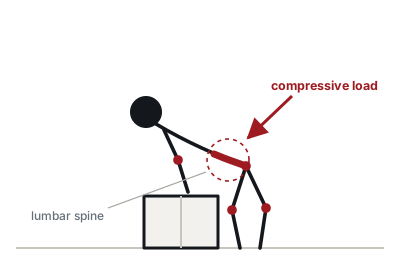
Whatever the setting, the analysis is the same: establish what force the body took, in which direction, over how long, and compare it against what the body tolerates.
The question we answer
Could this event have caused this injury?
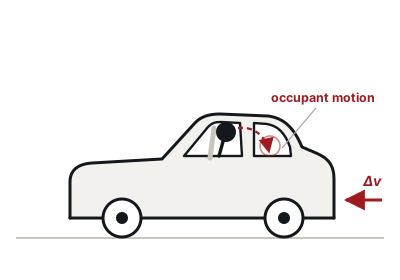
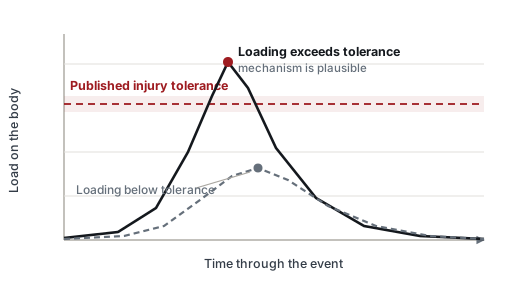
Medical records establish that an injury exists. They rarely establish what caused it. Biomechanics closes that gap by quantifying the forces, accelerations, and body motions the incident actually produced, then comparing them against published human tolerance data.
That analysis either supports the claimed mechanism or it does not. Either way, the finding is testable, documented, and traceable to the physical evidence in the file: vehicle damage, scene geometry, surface conditions, event data recorder output, and the medical imaging.
What a screening tells you
- Whether the physics support or contradict the claimed injury mechanism
- Which evidence is missing and worth preserving now
- Whether the case needs a biomechanist, a reconstructionist, or both
- A realistic timeline and cost before you commit
Areas of expertise
Where biomechanics decides the case
Four areas where the mechanism of injury is usually the contested issue.
Expert witness testimony
Rule 26 reports, deposition and trial testimony, rebuttal of opposing experts, and trial exhibits that a jury can follow.
Read moreInjury causation analysis
Quantifying loads, accelerations, and body kinematics in collisions, falls, and assaults, then testing them against injury tolerance.
Read moreSlip, trip, and fall
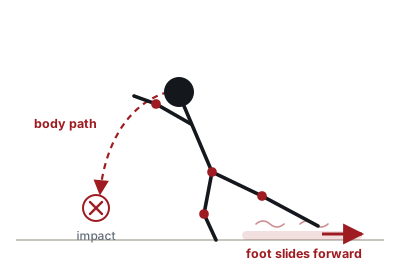
Coefficient of friction testing, surface and footwear assessment, gait analysis, and reconstruction of the fall itself.
Read moreSports and recreation
Causation in athletic injuries, equipment defect and protective gear performance, and technique or supervision factors.
Read moreHow we work
Predictable process, no surprises on the invoice
You work directly with the engineer who will sign the report and sit for the deposition. No case managers, no handoffs.
-
Screening
Send the incident facts and whatever records you have. We assess feasibility, identify the evidence that matters, and tell you if the biomechanics will not support the theory. This costs nothing.
-
Analysis
We reconstruct the loading environment from the physical evidence and apply validated injury criteria. You get a written scope, a fee estimate, and a date before work begins.
-
Testimony
A Rule 26 compliant report, demonstrative exhibits built for a lay jury, and an engineer prepared to defend every step of the method under cross‑examination.
Independent by design
Retained by plaintiff and defense counsel alike
An expert who only ever reaches one conclusion is an expert opposing counsel can impeach. We take instructions from both sides and the analysis runs the same way regardless of who is paying for it.
- Method and assumptions stated explicitly, so they can be checked
- Opinions bounded by what the evidence supports, with uncertainty named
- Published literature and validated tolerance data cited throughout
- We decline cases where the physics will not carry the opinion
Common questions
What counsel usually asks first
What do you need to start a screening?
A short description of the incident, the injuries claimed, the jurisdiction, and any hard deadlines. Photographs, the police or incident report, and medical imaging help but are not required at this stage.
How is biomechanics different from accident reconstruction?
Reconstruction establishes what the vehicles or objects did: speeds, impact angles, delta‑v. Biomechanics takes that output and determines what happened to the human body inside it, and whether the resulting loads are consistent with the injuries diagnosed. Many cases need both, and we will tell you when yours does.
Can you rebut an opposing expert's report?
Yes. We review the methodology, the data relied on, and whether the conclusions follow from it, then prepare a rebuttal report and deposition questions for your use.
Do you work in Canada as well as the United States?
Yes. Our engineers are based in Texas, California, Arizona, and Ontario, and we accept instructions in both countries.
How quickly can you turn a report around?
It depends on the evidence and the analysis required. We give you a firm date in writing with the fee estimate, before work starts, and we tell you at screening if your deadline is not realistic.
What does it cost?
The initial screening is free. Beyond that we quote a scope and estimate for each case rather than working open‑ended. Contact us for the current fee schedule.
Send us the facts. We will tell you if the physics support your case.
Free screening, response within one business day, no obligation to retain.