Areas of expertise
Biomechanical analysis for contested injury claims
Four practice areas, one method: quantify the forces the incident produced, then test them against what the human body can tolerate.
01 · Expert witness
Biomechanical engineer expert witness
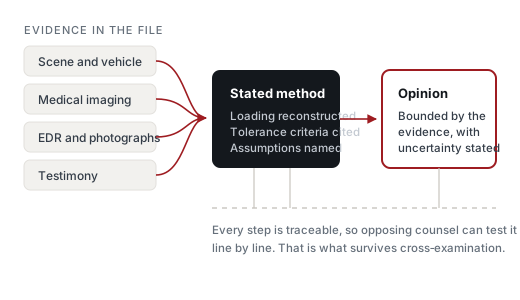
Reports and testimony prepared to Rule 26 disclosure standards, written to survive a Daubert or Frye challenge and to be understood by a jury.
We state the method, the data relied on, and the limits of the opinion in terms that hold up when opposing counsel goes through them line by line. Where an opposing expert has overreached, we say precisely where and why.
Deliverables
- Rule 26 compliant written reports
- Deposition and trial testimony
- Rebuttal reports and cross‑examination support
- Demonstrative exhibits and animations for trial
- Case strategy input during early assessment
02 · Causation
Injury analysis and mechanism
Determining how a specific injury did or did not arise from the forces and motions of a specific event.
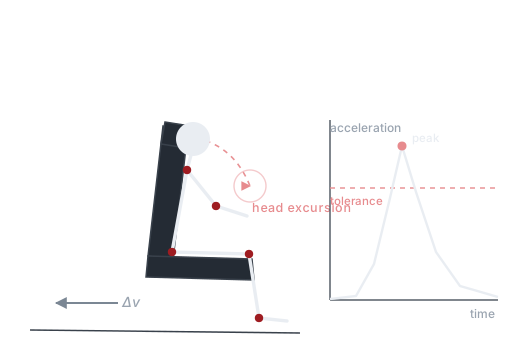
We reconstruct the loading environment the body experienced, in the direction and over the time interval that matters, then compare it against injury tolerance data from published human subject, cadaveric, and epidemiological research. The output is a defensible statement about whether the claimed mechanism is biomechanically plausible.
Typical matters
- Low‑speed collisions and disputed soft tissue injury
- Cervical, lumbar, and disc injury causation
- Traumatic brain injury and head impact assessment
- Occupant kinematics, seat belt and airbag interaction
- Assault, struck‑by, and workplace lifting incidents
- Pre‑existing condition versus acute trauma
03 · Premises
Slip, trip, and fall analysis
Whether the surface, the footwear, or the walker's own gait produced the fall, and whether the resulting injuries fit the fall described.
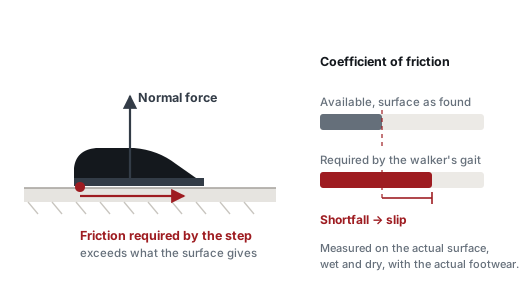
Slip and fall cases turn on measurable quantities: available friction versus required friction, the geometry of a change in level, lighting, handrail dimensions, and the biomechanics of recovery. We measure what can be measured and reconstruct the rest from the physical evidence and the witness accounts.
What we assess
- Coefficient of friction, wet and dry, on the actual surface
- Footwear condition, tread, and sole material
- Walkway geometry, transitions, and trip hazard height
- Gait, balance recovery, and fall kinematics
- Consistency of injury pattern with the fall described
- Applicable standards and code requirements
04 · Sports and recreation
Sports and recreation injuries
Separating inherent risk from equipment failure, defective protective gear, and unsafe technique or supervision.
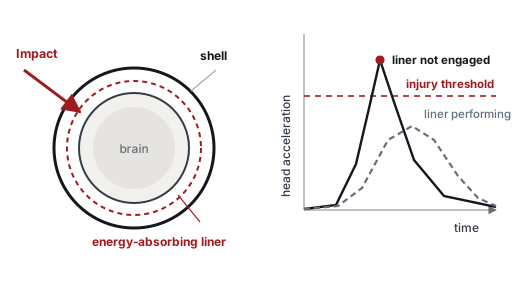
Athletic injury litigation usually asks whether the injury was the ordinary consequence of the activity or the result of something that should not have happened. We evaluate the mechanism, the loads involved, and whether the protective equipment performed as its standard requires.
Typical matters
- Helmet and protective equipment performance
- Concussion and head impact exposure
- Playing surface and facility condition
- Equipment defect and product liability
- Coaching, technique, and supervision factors
- Recreational vehicle and cycling incidents
Method
The same analysis, whichever side retains us
Evidence first
Photographs, scene measurements, vehicle damage, event data recorder output, medical imaging, and depositions. The opinion is built from the record, not around a theory.
Validated criteria
Injury thresholds drawn from peer‑reviewed human tolerance research, applied within their stated limits and cited so they can be checked.
Stated uncertainty
Where the evidence bounds an answer rather than fixing it, we give the range and say so. Overstated precision is the fastest way to lose an expert on cross.
Send us the facts. We will tell you if the physics support your case.
Free screening, response within one business day, no obligation to retain.